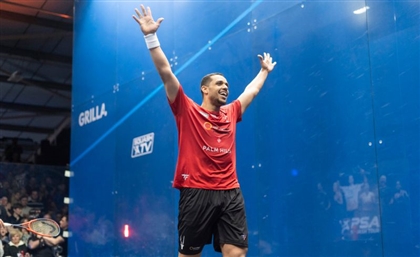


The Amr Shabana Effect: Egypt’s Squash Legend Who Changed the Game
He was a ninth seed in Lahore in 2003, beat the defending champion and flew home to an empty arrivals hall. Shabana talks about the slump that followed, the 33 months at No.1, and what he built after.
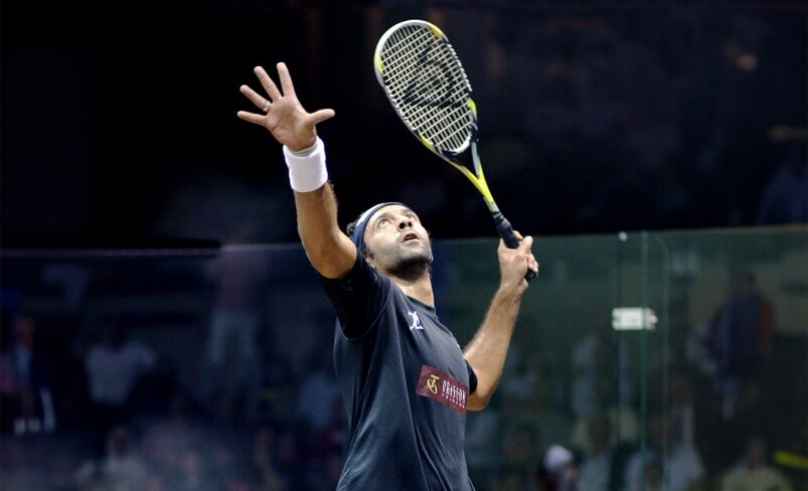
There was a time when an Egyptian squash player could win the biggest title in the sport and come home to nobody, landing in the capital to an empty arrivals hall and press that was barely present to document his first World Open trophy in 2003.
The quiet was disorienting to Amr Shabana, a player who kept going while an entire uninterested nation looked the other way. It took him three more years of grinding through a form slump and winning the World Open again before he finally made it to the summit of the sport in April 2006.
That resilience wasn't something he discovered once and coasted on. It was something he had to keep relearning. "That pressure never really disappears, you just learn how to perform with it," Shabana tells SceneSports. "At the highest level, everyone can play. The difference is often what happens mentally when things aren't going your way. I learned not to let one bad match, one mistake or one setback define what came next."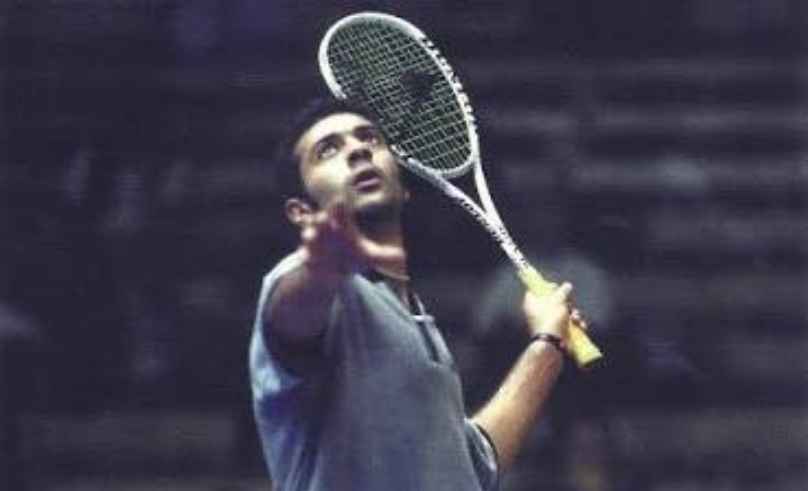 He was the first Egyptian man to reach the top, and he held the position for 33 unbroken months, one of the longest reigns any player has managed.
What makes it worth pausing on now is how unrecognisable the landscape has become. The same country that once left its best player to find his own way home is today producing so many elite players that a top ten ranking barely raises an eyebrow in Cairo. Shabana laid the first stone of that culture, and the empire that followed traces back to a man who had to prove, entirely alone, that it could be done at all.
Born in Cairo in 1979, left-handed and nicknamed 'The Maestro' for a game built on touch and disguise, Shabana turned professional as a teenager and won his first PSA Tour title in Mexico in 1999. Ask him about the 2003 breakthrough or the 2006 ranking now, and he talks about what it meant for the people watching.
"At the time, I don't think I fully understood what it would come to mean," he says of that first World No.1 ranking. "I was focused on competing, winning and getting better. But becoming the first Egyptian to reach World No.1 was bigger than me. Looking back, I'm proud that it helped show that an Egyptian player could reach the very top of the sport."
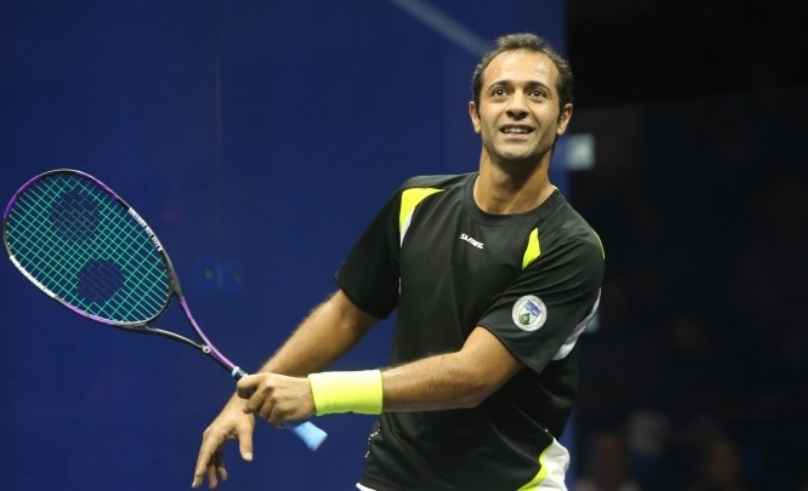 That same instinct to unsettle was there long before the ranking. It carried him through Lahore in 2003, when he arrived at the World Open as a ninth seed nobody had circled as a contender and left as Egypt's first champion of the sport's premier title, beating David Palmer, Anthony Ricketts and Karim Darwish before outlasting Thierry Lincou in a five-game final.
"I wasn't one of the favourites going into the 2003 World Open in Lahore, and winning my first World Championship changed everything for me," he says. "More than the title itself, it changed what I believed I was capable of. Once you prove to yourself that you can win at that level, you start looking at your career differently."
The year after tested him in a way the trophy hadn't. He reached only one final, and lost it, to Palmer again, this time at the British Open.
It would have been easy to read that as the ceiling. Shabana rebuilt with a new coach, a new manager, and a version of his game that looked calmer and harder to break down. By the time he reached the World Open final in Hong Kong in 2005, the slump was a memory, and he beat Palmer in straight games to become the first player since the era of the Khans to win the title twice.
Four months later, in April 2006, he climbed to World No.1. He added a third World Open title the following year in Bermuda, beating Grégory Gaultier in the final, and stayed at the top until his own countryman, Karim Darwish, took the ranking from him in January 2009.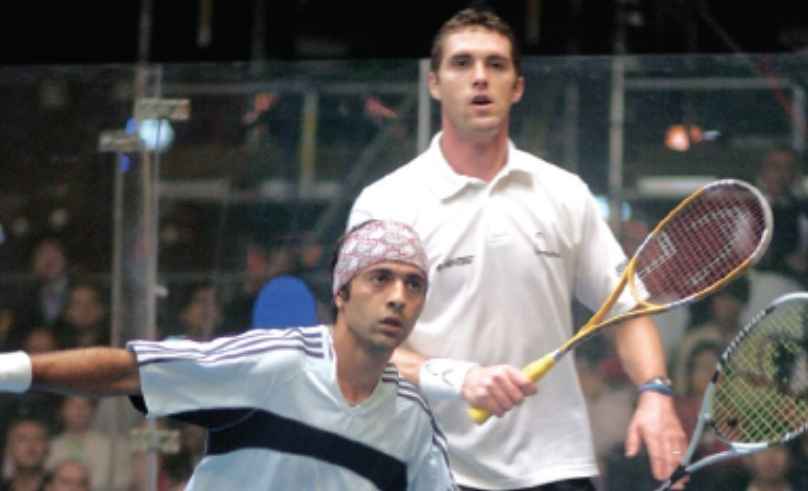 Shabana didn't take long to answer. Later that same year, he beat another compatriot, defending champion Ramy Ashour, to win a fourth World Championship, nearly six years after he'd become the first Egyptian to win one at all.
What he seems proudest of is barely any of that. It's what came after him. "There's a culture around squash in Egypt now that is very difficult to replicate," he says. "Young players grow up watching world-class players, training alongside them and believing that reaching that level is normal and achievable. There's also a very Egyptian style of playing, creative, instinctive and fearless. Each generation then raises the standard for the next one." He says it plainly, almost as an observer, as if he weren't the reason that culture exists in the first place.
Shabana's professional career came to an end in 2015, 20 years after he first turned professional. Retirement took some working out, and he talks about it with the same honesty he brings to everything else. "The biggest adjustment was losing that very clear sense of purpose you have as a professional athlete," he says. "Your entire life is built around preparing for the next challenge. Suddenly, that structure is gone and you have to find new things that give you the same drive."
He didn't stay away from the sport for long. These days he lives in Toronto and coaches through Squash Revolution, the academy he's part of in the city and in Washington, D.C., working with junior and elite players coming up through a system he once had to build from nothing.
Back in Egypt, he's taken a bigger stake in that pipeline. In November 2024 he acquired Mahara Sports Management, an athlete-development and sports management firm, with an eye on building out the next generation of Egyptian talent ahead of squash's Olympic debut at Los Angeles 2028. In September 2025 he was inducted into the PSA Hall of Fame alongside fellow Egyptian Raneem El Welily, the pair becoming its ninth and tenth members.
"The titles and the World No.1 ranking will always be part of my career, but I'd rather the legacy be that I helped open a door," he says. "If seeing an Egyptian become World No.1 made even a few young players believe they could do it too, then that means more to me than any individual result."
"I hope that what I do now continues that same idea," he adds. "Creating opportunities and pathways for the next generation of Egyptian athletes to reach their potential."
- Previous Article Omar Fayed Joins Frosinone Ahead of Serie A Return
- Next Article Running Communities Across the Arab World