


Why Does Australia Compete in AFC Tournaments & Not OFC?
The Socceroos submitted a formal application to switch continental federations in 2005.

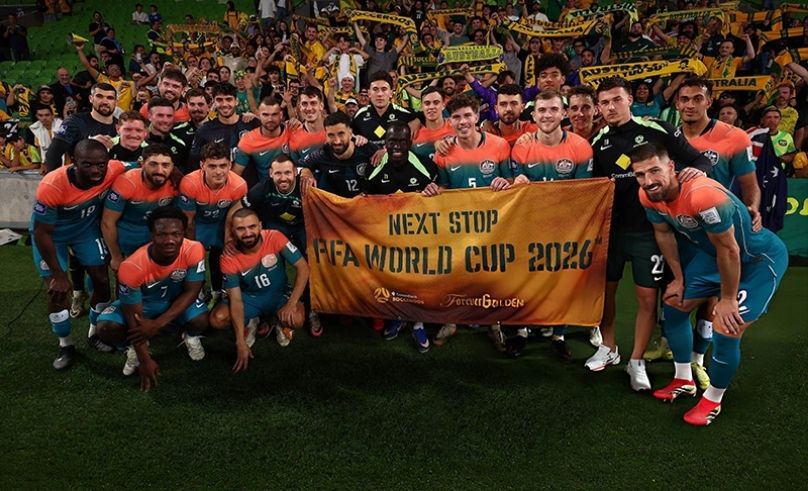
Australia has long been one of the most successful footballing nations to come out of the Oceania Football Confederation — so successful, in fact, that it had to change confederations entirely just to find a worthy opponent. Despite decades of domestic growth, it's rare for any nation to switch its continental football allegiance. SceneSports breaks down the reason Australia made the move from the OFC to the Asian Football Confederation.
Why Did Australia Join the AFC?
Australia was a long-standing member of the OFC, but frustration had been building for years. Despite being the region's dominant force by a considerable margin, FIFA never awarded Oceania a guaranteed World Cup berth — the confederation's champion received just 0.5 of a spot, meaning the Socceroos were constantly forced into intercontinental playoffs.
The results were brutal. North Korea knocked them out in 1966. They fell to Israel in 1970, Scotland in 1986, Argentina in 1994, Iran in 1998, and Uruguay in 2002. They did make it to the 1974 World Cup in West Germany — but then missed seven consecutive tournaments, leaving their World Cup ambitions in permanent state of near-miss agony.
-1131ad93-8f9d-466a-93bb-a17f477edcda.jpg) Fed up with the playoff grind, Australia looked east. The AFC offered a more accessible path to the World Cup, along with far greater commercial and marketing opportunities through continental competition.
In 2005, Australia formally resigned from the OFC and applied to join the AFC. FIFA approved the switch. Since then, the Socceroos have qualified for every single World Cup: 2006, 2010, 2014, 2018, 2022, and 2026.
What Are FIFA's Rules on Switching Confederations?
Fed up with the playoff grind, Australia looked east. The AFC offered a more accessible path to the World Cup, along with far greater commercial and marketing opportunities through continental competition.
In 2005, Australia formally resigned from the OFC and applied to join the AFC. FIFA approved the switch. Since then, the Socceroos have qualified for every single World Cup: 2006, 2010, 2014, 2018, 2022, and 2026.
What Are FIFA's Rules on Switching Confederations?
Australia submitted its formal application in 2005, and within just one year, then-FIFA President Sepp Blatter signed off on the switch. Under FIFA's regulations, three conditions must be met for any nation seeking to change confederations:
- FIFA must approve the transfer.
- Member nations of the target confederation must not object.
- The target confederation itself must agree to accept the nation.
-27ff8bdb-0bd9-4155-9a79-adaef88b8b4b.jpg) Australia cleared all three hurdles. The AFC welcomed them with open arms — and, perhaps surprisingly, the OFC didn't exactly mourn the loss either.
Blatter said at the time: "All parties were happy with this move, which is why the executive committee approved it in accordance with the regulations."
How Did Both Oceania and Asia Benefit?
Australia cleared all three hurdles. The AFC welcomed them with open arms — and, perhaps surprisingly, the OFC didn't exactly mourn the loss either.
Blatter said at the time: "All parties were happy with this move, which is why the executive committee approved it in accordance with the regulations."
How Did Both Oceania and Asia Benefit?
The transfer was considered a win on all three sides: for Australia, for the OFC, and for the AFC. During their time in Oceania, Australia had some of the strongest squads in their history — players active across Europe's top leagues — yet still couldn't guarantee a World Cup spot. Moving to Asia cleared that path, while opening up a whole new commercial landscape.
For the OFC, Australia's departure levelled the playing field. Other nations finally had a shot at the intercontinental playoff without one team perpetually locking the door. New Zealand reached the 2010 World Cup. Fiji competed at the 2016 Olympics. The absence of Australia gave the rest of the region room to grow and find their footing on the global map.
-aa0c4a8a-7111-473f-b543-0cde11a12e5c.jpg) Blatter put it plainly: "Oceania's representatives had felt for years that Australia was simply too strong and was blocking the path for everyone else. Now New Zealand and the Pacific Island nations have a genuine chance. They can stand on their own feet — and I'm confident it will work."
Oceania — A Quick Breakdown
Blatter put it plainly: "Oceania's representatives had felt for years that Australia was simply too strong and was blocking the path for everyone else. Now New Zealand and the Pacific Island nations have a genuine chance. They can stand on their own feet — and I'm confident it will work."
Oceania — A Quick Breakdown
The Oceania region spans 14 independent nations across the South Pacific, grouped into four main clusters. Australasia is home to the two largest — Australia and New Zealand. Melanesia includes Papua New Guinea, Solomon Islands, Fiji, and Vanuatu. Polynesia stretches across Samoa, Tonga, and Tuvalu. And Micronesia covers the smaller northwestern island states: the Federated States of Micronesia, Palau, Kiribati, Marshall Islands, and Nauru — the world's smallest island nation.
-1dcbd444-23e2-4be4-806d-e69881023e53.jpg) The AFC's Welcome
The AFC's Welcome
The Asian Football Confederation was equally enthusiastic about the addition. Australian players — many of them active in European football — brought physicality and tactical variety that raised the standard of competition across the continent. Their presence pushed Asian nations to sharpen up, adapt, and ultimately grow from the challenge of facing a side operating at a consistently higher level.
- Previous Article Meet Samar: The Alexandria Girl Chasing the Ballon d'Or
- Next Article Egypt's National Team Physio Mostafa Sedky is Changing Sports Rehab
Related Articles


Trending This Month
-
 Oct 04, 2026
 -

-
 Oct 05, 2026
 -