

Stadiums Across the Middle East & Africa Shaped by Their Surroundings
From Bedouin tents to date palms, these stadiums turn local landscapes and traditions into architecture.

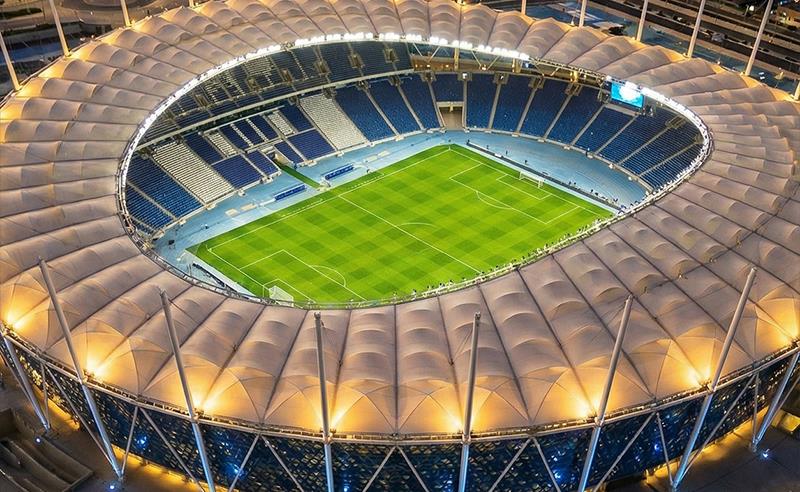
Across Middle East and Africa, stadiums have evolved beyond venues designed solely for competition. Increasingly, they are being shaped by the places they inhabit, drawing on local landscapes, building traditions and cultural references to produce architecture rooted in its surroundings. From desert tents and date palms to mountain terrain and ancient civilisations, these projects demonstrate how large-scale sports infrastructure can engage with regional identity.
New Administrative Capital Stadium
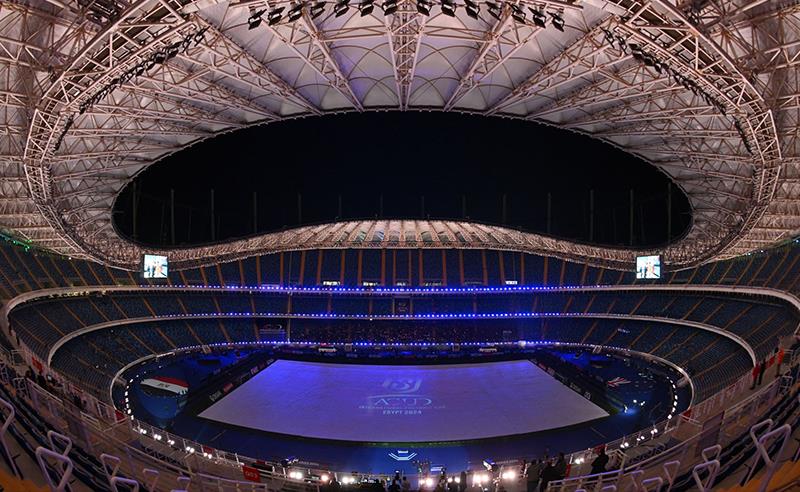
Located within the Olympic City of Egypt's New Capital, New Administrative Capital Stadium, also known as Misr Stadium, takes its architectural language from ancient Egyptian iconography. Its sweeping exterior is inspired by the headdress of Queen Nefertiti, translating a familiar historical motif into the scale of contemporary sports architecture.
Al Bayt Stadium
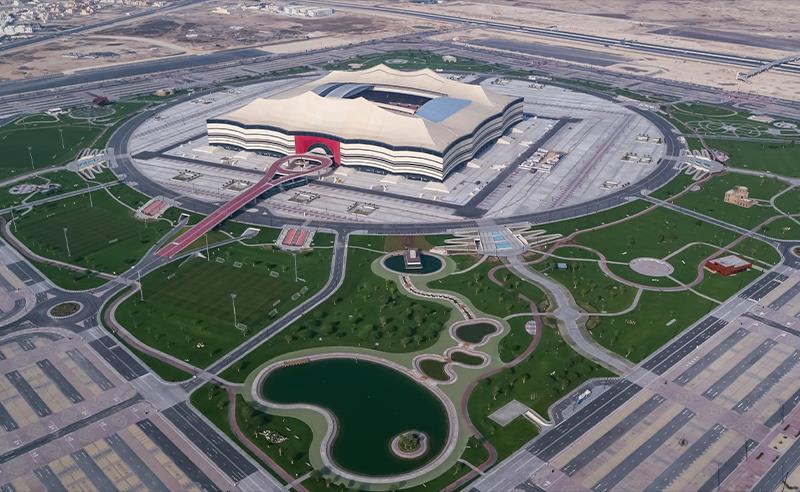
Designed for the 2022 FIFA World Cup in Qatar, Al Bayt Stadium in Al Khor takes its form from the Bayt Al Sha'ar, the traditional woven tent used by Bedouin communities across the Arabian Peninsula. The black and white exterior recalls the fabric of these tents. Inside, Sadu weaving patterns reference one of Qatar's longstanding craft traditions, bringing local textile heritage into the stadium's architectural language.
Hazza bin Zayed Stadium
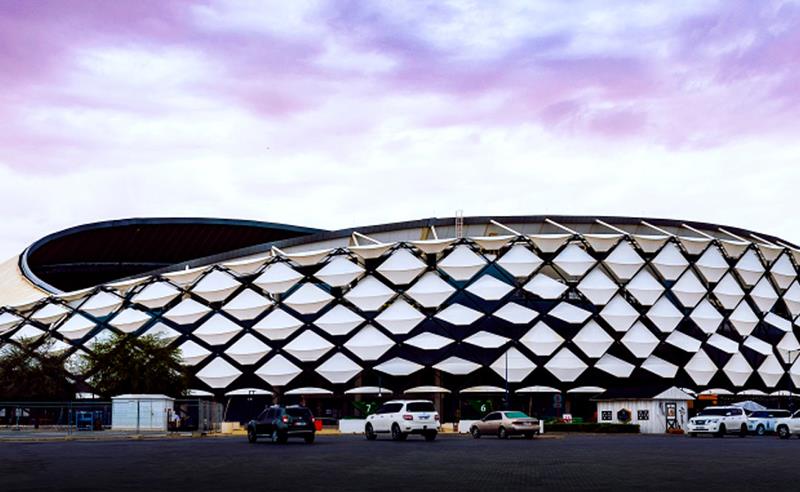
In Al Ain, UAE, Hazza bin Zayed Stadium responds to both climate and context through a façade inspired by the trunk of the date palm. Its layered geometric envelope provides shade and allows air to move naturally through the seating bowl, reducing reliance on mechanical cooling. The design reflects the importance of the date palm within Emirati culture and incorporates passive environmental strategies into the building.
Adrar Stadium
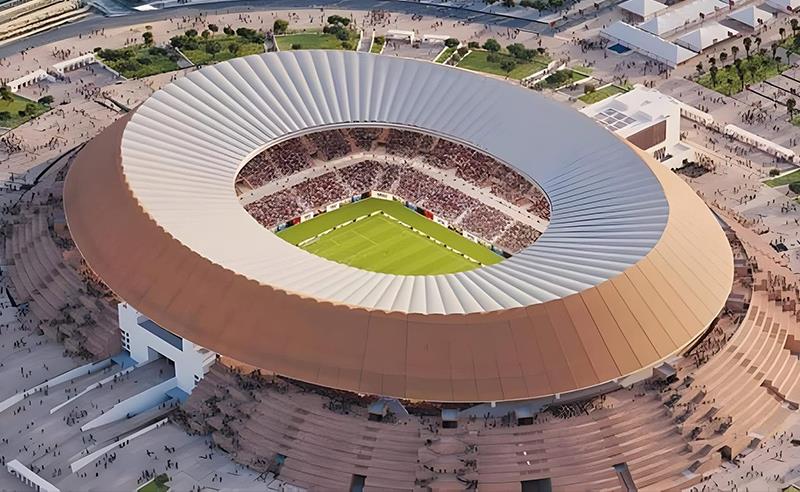
Set on the outskirts of Agadir, Morocco, Adrar Stadium is shaped by the landscape that surrounds it. Its stone-coloured exterior references the fortified architecture associated with Amazigh settlements, allowing the building to sit comfortably against the foothills beyond the city. Structural systems were developed to respond to the region's seismic conditions, embedding resilience into the stadium's design.
5 July 1962 Stadium
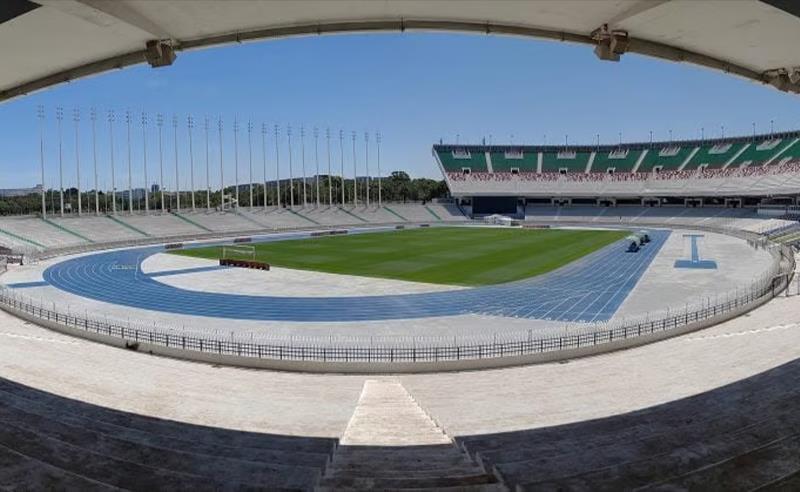
Completed during the 1970s, the 5 July 1962 Stadium remains one of Algiers' defining sporting landmarks. Its exposed concrete structure reflects the architectural language of its era. An asymmetrical layout leaves one side of the stadium open, framing uninterrupted views across the city.
Amman International Stadium
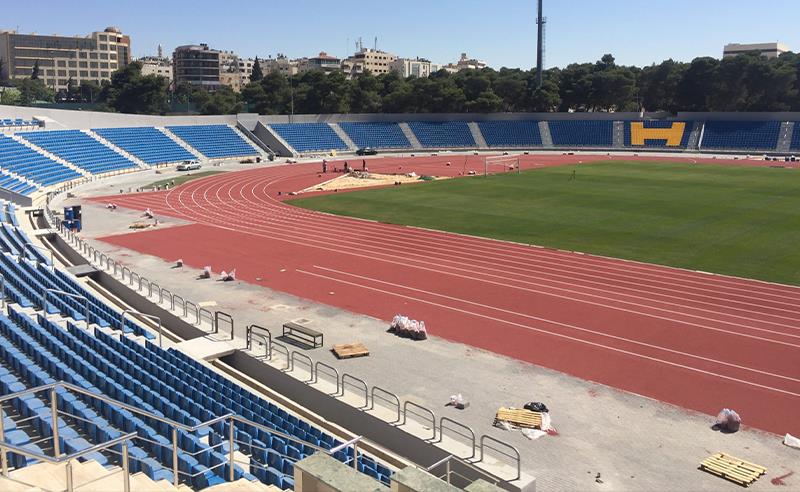
Amman International Stadium takes advantage of the capital's distinctive topography. Built into the slopes of Sports City, sections of the seating are carved into the natural terrain, allowing the landscape to shape the stadium's form. The stepped arrangement recalls the geometry of Roman theatres found throughout Jordan, making the site's contours an integral part of the design.
Camille Chamoun Sports City Stadium
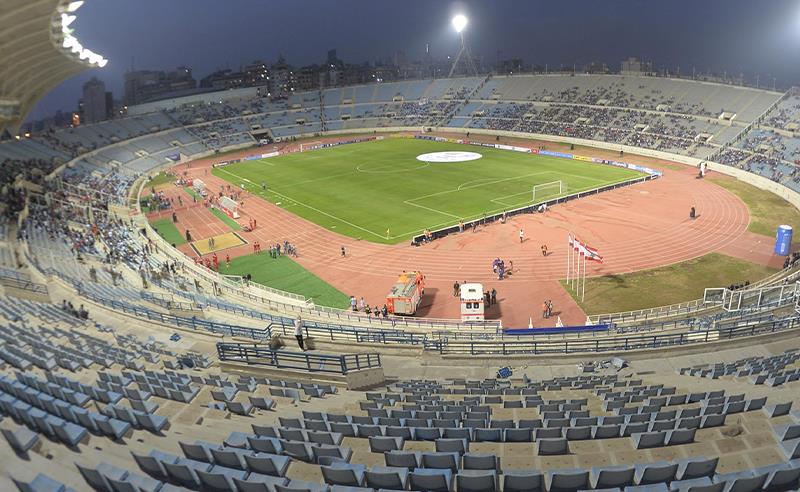
Facing the Mediterranean coastline in Beirut, Camille Chamoun Sports City Stadium is defined by its relationship with its setting. Its open design gives spectators views towards both the sea and the mountains surrounding the Lebanese capital.
Jaber Al Ahmad International Stadium
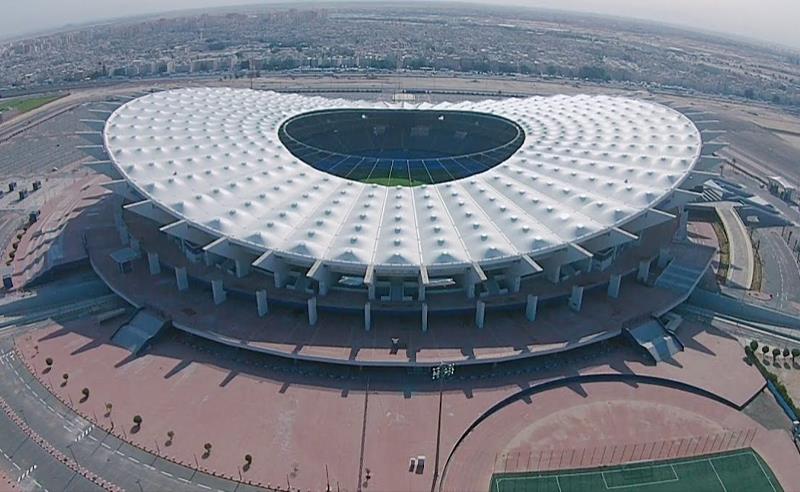
Jaber Al Ahmad International Stadium references Kuwait's maritime heritage through an exterior inspired by the curved form of the traditional boom dhow. The sweeping roofline and layered façade reinforce this nautical silhouette. The building envelope also responds to Kuwait's climate through materials selected to withstand demanding environmental conditions.
Tripoli International Stadium
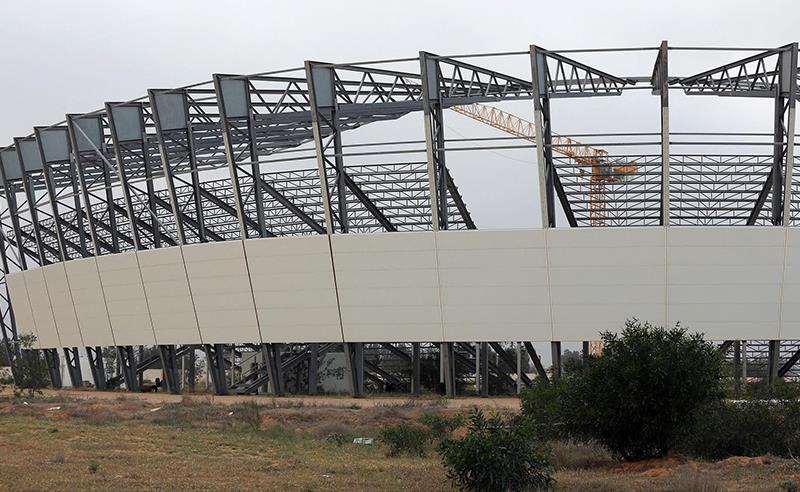
Tripoli International Stadium in Libya follows the geometry of a classical Olympic stadium, with an elliptical bowl enclosing football and athletics facilities. Much of the pitch sits below natural ground level, allowing the surrounding stands to rise as a continuous ring around the playing field.
Basra International Stadium
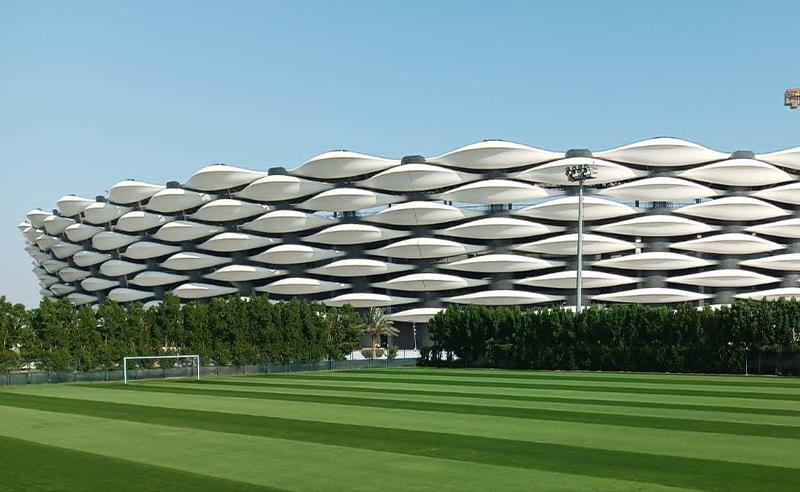
Basra International Stadium takes its architectural cues from one of southern Iraq's defining agricultural landscapes. Its woven exterior structure is inspired by the texture and pattern of date palm trunks, referencing a crop closely associated with the city's history and economy. Integrated lighting reveals the depth of the façade after dark, emphasising the structural pattern that wraps around the stadium.