

Saudi Arabia’s World Cup Venues are Sci-Fci Spectacles of Sport
The building strategy revolves around innovation and prolonged use in alignment with Saudi Arabia’s vision for the future.


When Saudi Arabia was confirmed as host of the 2034 FIFA World Cup in 2024, the announcement signalled a large-scale stadium development programme alongside the tournament itself. As part of its bid, the Kingdom outlined 15 stadiums, including eight new builds, that will form the core of the tournament’s infrastructure.
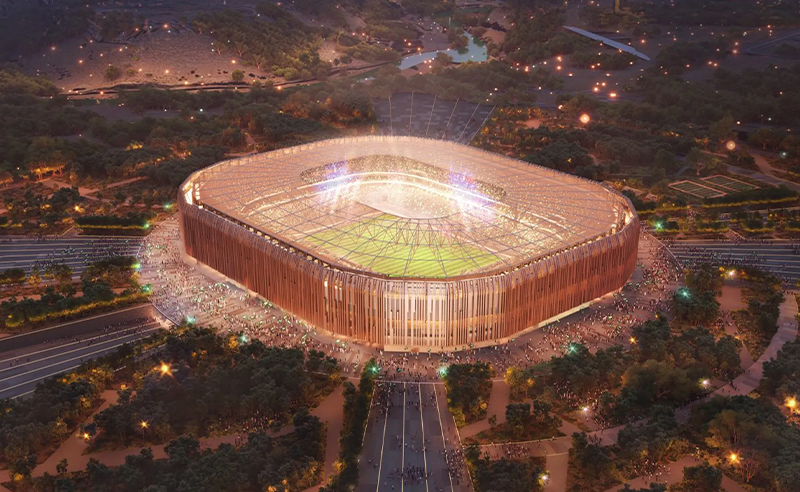
Global design firm Populous is responsible for several of these venues, which are currently in different stages of design and construction. The projects focus on integrated sports facilities, environmental considerations and long-term usability beyond the tournament.
SceneSports reached out to the firm to discuss and examine three of its key stadium developments in Saudi Arabia...
Aramco Stadium
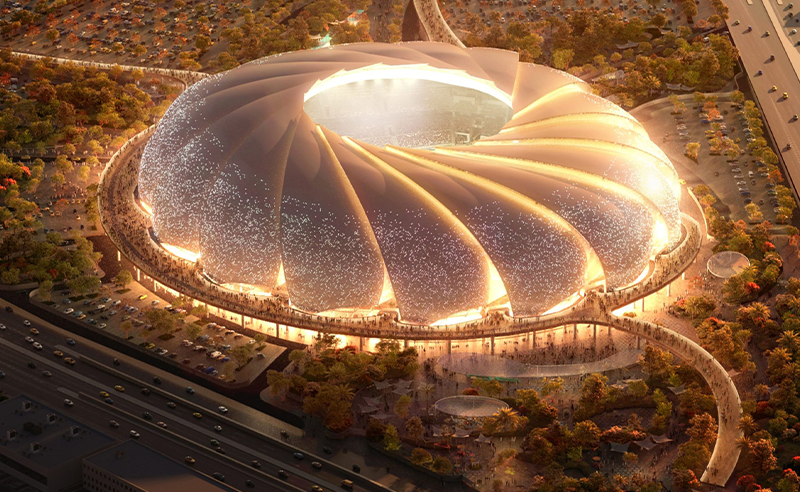
Aramco Stadium is set to host matches during the AFC Asian Cup in 2027, offering an early look at one of the venues proposed for the 2034 FIFA World Cup.
With an expected seating capacity of around 47,000, the stadium is part of a group of venues designed by Populous included in the official list of candidate sites for the tournament.
Located in Al Khobar, the design draws on the coastal landscape of the Arabian Gulf. The exterior reflects the movement of waves, alongside spiral forms found in nature.
This concept continues inside the venue, where ramps and walkways follow a spiral layout guiding spectators towards the seating bowl. The bowl itself adopts an elliptical form, designed to reduce the stadium’s footprint and support natural ventilation.
Prince Mohammed Bin Salman Stadium
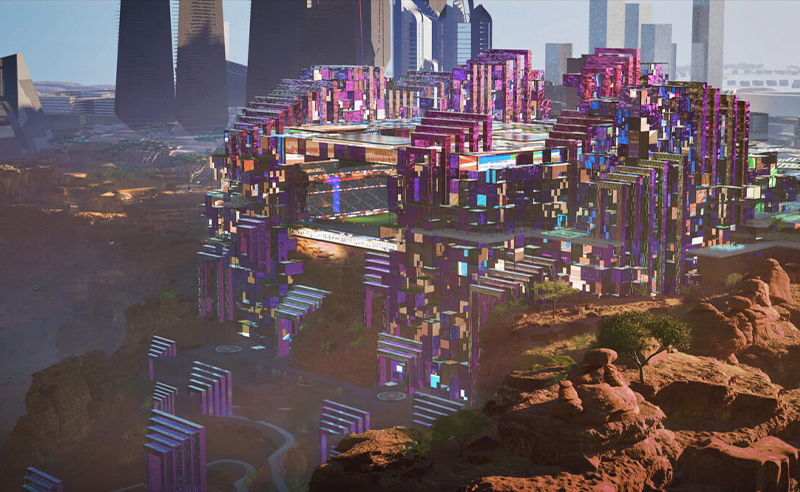
Prince Mohammed Bin Salman Stadium is being designed as a fully integrated, multi-purpose venue capable of adapting to different event formats within hours. The stadium will feature a retractable roof, pitch and LED wall, allowing it to shift between sports and entertainment configurations.
The 45,000-seat venue is being developed to meet FIFA compliance requirements for both club and international competitions. Once operational, it will serve as the home ground for Saudi Pro League clubs Al Hilal and Al Nassr.
“The level of embedded technology will enable both advanced gaming and entertainment experiences, as well as new ways for fans to watch and engage with football,” says Christopher Lee, EMEA Managing Director at Populous.
The stadium will be located on top of the 200-metre-high Tuwaiq cliffs, overlooking Qiddiya City. It is also expected to host matches during the 2034 FIFA World Cup, including quarter-finals and the third-place play-off.
King Salman Stadium
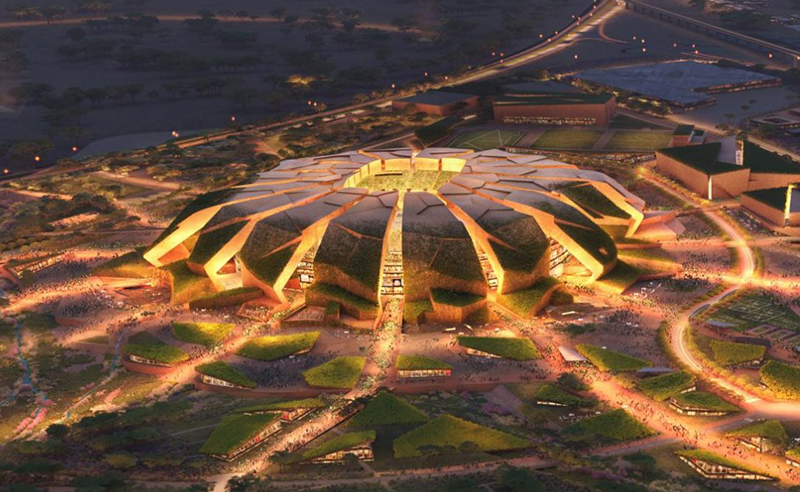
The design of King Salman Stadium draws from Saudi Arabia’s natural landscape, with the broader masterplan built around a concept where each venue is imagined as a seed emerging from the ground. This approach informs the architecture as a controlled intervention that integrates with its surroundings rather than imposing on them.
Scheduled for completion in 2029, the stadium is set to become the primary home of the Saudi Arabian national football team.
The design prioritises flexibility, allowing the venue to transition between major events and daily use, supporting its role as a year-round destination within the wider masterplan.
“Beyond creating advanced sports facilities, the development aims to unite athleticism and the environment, inspiring all who engage with it,” says Shireen Hamdan, General Manager of Populous KSA. “The design philosophy reflects a commitment to cutting-edge infrastructure while paying tribute to the intrinsic connection between sustainable development, human activity and the natural world.”
The main stadium will have a gross seating capacity of more than 92,000, including a Royal Box, hospitality skyboxes and lounges, 300 VVIP seats, and 2,200 VIP seats.
The seating bowl has been designed to be as compact as possible to enhance the spectator experience and create a more intimate atmosphere, while meeting the latest international football standards.