

How MMA's Sylvie Samaha is Punching Through Records & Stereotypes
The Lebanese fighter was the first woman from her country to win gold at the Asian Championship.
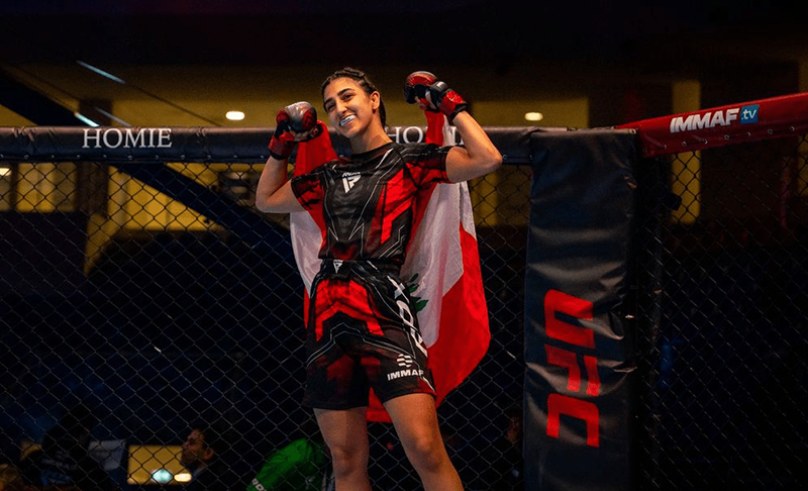
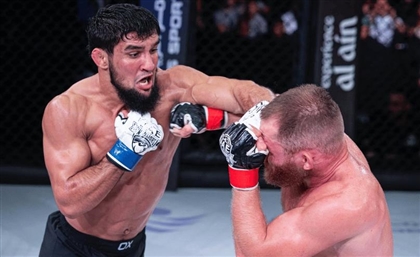
There’s a quiet sense of calm and collectedness about Sylvie Samaha that surprises most people she first meets. The Lebanese mixed martial artist spends the majority of her time fighting, or training to fight. Outside of the cage, however, her attitude represents a different side of her — one more closely related to the mental side of the sport.
“It’s not just about fighting, it’s about mastering yourself,” she tells SceneSports. “MMA is raw and honest. It tests everything, your strength, mindset and discipline.”
It’s a philosophy that has taken her to unchartered territory. At just 23 years of age, she’s already the first Lebanese woman to win both the Asian and World Championship titles. Training under Mohammad Fakhreddine, a national icon in his own right, Samaha has firmly solidified her place within the combat sports scene in Lebanon as well as across the Middle East. But she’s convinced that she’s only just begun making history.
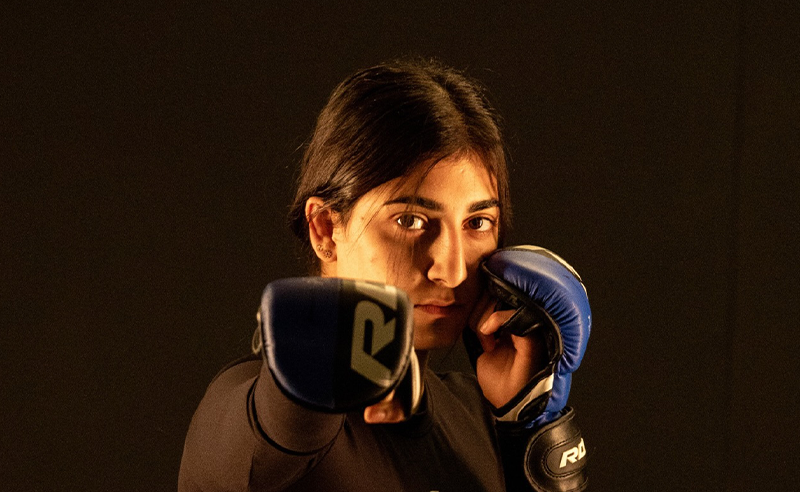
“I’m representing Lebanese women, my team, my coach, and everything we stand for,” Samaha explains. “I also see myself as an inspiration for young kids, especially girls. That pushes me, and I feel like I can’t let them down.”
Samaha started in taekwondo when she was about 10, picking it up as a school activity and sticking with it long enough to earn a black belt. At the time, it wasn’t about competition as much as it was about self-improvement.
“I’ve always loved the idea of being strong,” she says. “When I was younger, I was very skinny, and I made the decision to change that.”
She later graduated and started working as a PE teacher, strengthening her structured approach to life, and her connectedness to sport, all while passively paving a way for her journey into MMA.
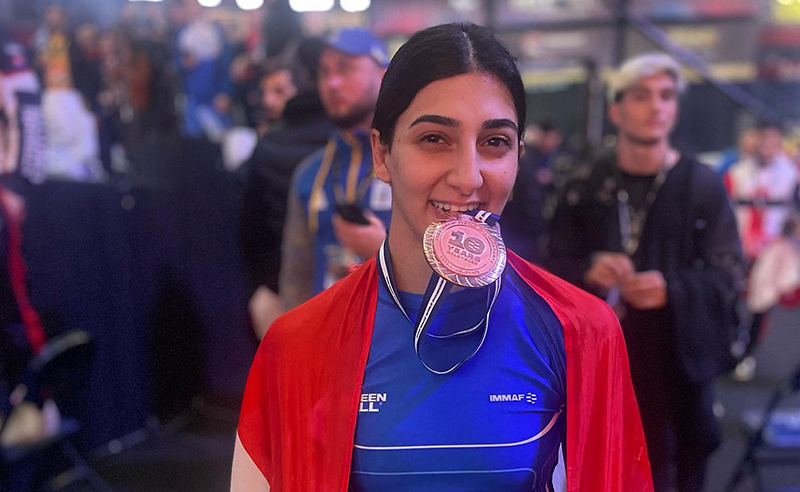
Samaha first came across the sport it on TV. Fakhreddine, now her coach, was fighting in Desert Force, which caught her interest immediately. “I was a big fan from that moment. I always had the desire to train with him,” she says.
When Samaha did eventually step into a gym, the introduction was blunt. Her first private session pushed her to the point of throwing up, something that made her realise it’s not a game. But instead of putting her off, it had the opposite effect entirely.
Within two months, she’d won the Lebanese MMA Championship. Not long after, she was competing internationally, placing third at the IMMAF World Championships and becoming the first Lebanese woman to win a fight at that level. Ten months later, she took gold at the Asian Championships.
Despite that rapid success, the attitudes and mentality around her took longer to catch up. Her family, initially, were against it, more out of concern than anything else. Outside that circle, the responses were familiar, all to the tune of surprise, curiosity and an occasional half-joking caution.
“Some people say, ‘We don’t want to mess with you,’” Samaha recalls. “Others ask why I would choose a sport that involves getting hurt.”
It’s not something she pushes back against directly. If anything, she lets the results do the work. In her philosophy, respect follows consistency.
The shift from scepticism to support is gradual. It’s something that is still ongoing and largely parallel to the development of the sport for women In Lebanon. The space for female fighters isn’t exactly established. There are cultural expectations, limited opportunities, and not much in the way of financial backing.
At one point, Samaha was the only female fighter on her team. There weren’t many local examples to follow, which meant she had to figure most of it out in real time.
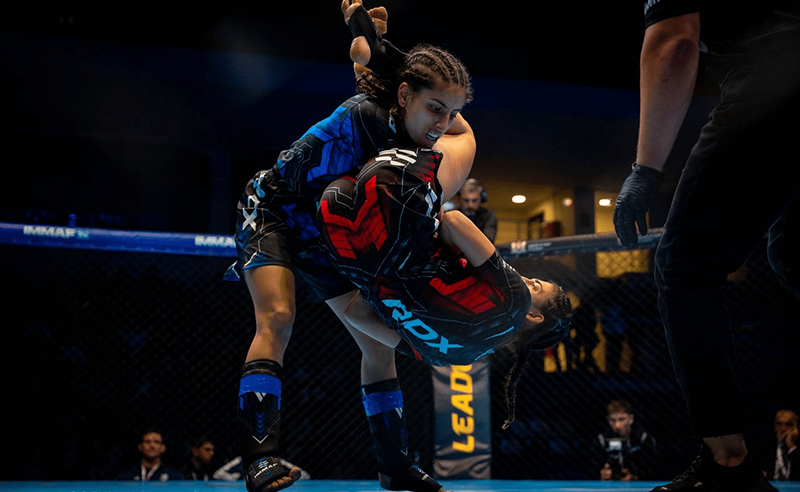
“Sometimes breaking expectations is exactly what creates change,” she says. "That situation pushed me even more.”
Inside the cage, the approach is more straightforward. She describes herself as well-rounded, able to finish fights by TKO or submission. The emphasis, however, is on adaptation: adjusting to the opponent, the moment and the situation.
For her, though, the scope is wider than that. Samaha welcomes the notion of her journey blazing a trail for others, adding that it would give her immense pride. It’s a role she didn’t necessarily set out to take on, but one she’s aware of now, especially in the messages she gets from younger girls. Her advice to them is cut and dry.
“Just start anyway,” she says. “Confidence comes after you take the first step, not before it.”
For now, the focus is back on what’s next, including another run at the World Championships, the aim of becoming a two-time world champion, and eventually making the move into the professional circuit.
"The best feeling I always have is knowing I’m exactly where I’m meant to be," she says.