

How ArabsMMA Turned the Region's Fragmented Fight Scene Into a Network
“For MMA in the region to grow, it needs a media platform,” Ephrem says. “There is no other way.”


Like many fight fans across the region, Zahi Ephrem, founder of ArabsMMA, didn’t grow up inside an arena, he grew up orbiting one. Before there were packed fight cards in Abu Dhabi or regional promotions with international reach, there were scattered gyms, improvised rings, and a young Ephrem moving between boxing sessions and martial arts classes, trying to make sense of a sport that hadn’t yet found its place in the Middle East.
-0a424fe6-bb54-4793-95e0-568862c0a4fe.jpg) “The first time I saw anything related to actual MMA fights, it wasn’t even a video,” Ephrem recalls. “It was just images of some crazy event happening in Japan. And the rules were crazy.”
He was around 14 or 15 then, growing up in Lebanon, already familiar with combat through boxing and different martial arts. But this was something else. In the early 2000s, before the UFC became the global machine it is today, Japan’s Pride Fighting Championships was one of the biggest names in the sport. The fights were theatrical, brutal, and often governed by rules that now feel almost impossible to imagine.
“If someone was on the ground, you could kick him in the head,” says Ephrem. “You could stomp him. Nowadays, these things are illegal. So, you can only imagine how things were back then.”
For many people, that would have remained a strange teenage memory passed around at the dinner table. For Ephrem, it became the beginning of a much larger obsession.
“The first time I saw anything related to actual MMA fights, it wasn’t even a video,” Ephrem recalls. “It was just images of some crazy event happening in Japan. And the rules were crazy.”
He was around 14 or 15 then, growing up in Lebanon, already familiar with combat through boxing and different martial arts. But this was something else. In the early 2000s, before the UFC became the global machine it is today, Japan’s Pride Fighting Championships was one of the biggest names in the sport. The fights were theatrical, brutal, and often governed by rules that now feel almost impossible to imagine.
“If someone was on the ground, you could kick him in the head,” says Ephrem. “You could stomp him. Nowadays, these things are illegal. So, you can only imagine how things were back then.”
For many people, that would have remained a strange teenage memory passed around at the dinner table. For Ephrem, it became the beginning of a much larger obsession.
-f959dff2-6cdf-43c1-8fdb-5549c656347b.jpg) In 2013, as mixed martial arts were slowly beginning to surface across the Middle East, Ephrem started noticing something. There were Arab fighters. There were early promotions. There were people trying to organise events in Jordan, Lebanon, the Gulf and beyond. But there was no real place where the scene could see itself.
There was no central platform or consistent coverage. More so, there was no regional archive of fighters, stories, records, events, rivalries or ambitions.
“My first thought was, for MMA in the region to grow, it needs a media platform,” Ephrem says. “There is no other way.”
That idea soon became ArabsMMA.
At the time, the regional MMA ecosystem barely had the shape of an ecosystem. Athletes were scattered across countries, promotions were still finding their footing and even social media presence was limited. A fighter might be known inside one gym, one city or one small circle of fans, but almost invisible to the wider region.
Ephrem saw the gap not just as a media opportunity, but as an infrastructure problem.
“It comes without saying that in order for any type of industry to flourish, you need some media around it,” he says. “You need someone to tell the stories, create the content, and cover the events.”
In the early days, that meant doing everything. ArabsMMA was not launched into a mature sports market, it was built while the sport itself was still being built.
Ephrem travelled with federations, covered emerging promotions, met fighters before they became names, and placed himself right in the middle of a scene that was often held together by a very high tolerance for chaos.
When asked what those first events were like, he laughs. “Oof. They were as crazy as the stomps I saw in Pride.”
There were organisers who had never really set up a combat sports event before, but had skills from other industries and tried to transfer them into MMA. There were martial artists coming from single disciplines, Muay Thai champions, boxers and tough guys from local gyms, stepping into cages without fully understanding how different the sport could be once the fight hit the ground.
“Someone would come in thinking they could find their way,” Ephrem says. “And little did they know that if someone just took them down, it was like drowning him in an ocean.”
For Ephrem, though, that rawness was part of what made the period special. Not only was he watching a new sport emerge, but he was also watching the formation of the Arab world’s first MMA generation.
“I had the opportunity to see whoever became a star, or close to a star, in the region fight for the first time in their life. Fighters who now have 13 years of experience.”
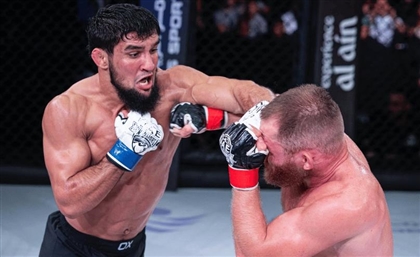
Among the names that stayed with him most is Mohammad Fakhreddine, the Lebanese fighter who would later become a two-division BRAVE Combat Federation champion. Fakhreddine, with his striking presence, tattoos and fighting personality, represented exactly the kind of athlete Ephrem believed the region needed to see more clearly. Not just as a name on a card, but as a character in this growing ecosystem.
In 2013, as mixed martial arts were slowly beginning to surface across the Middle East, Ephrem started noticing something. There were Arab fighters. There were early promotions. There were people trying to organise events in Jordan, Lebanon, the Gulf and beyond. But there was no real place where the scene could see itself.
There was no central platform or consistent coverage. More so, there was no regional archive of fighters, stories, records, events, rivalries or ambitions.
“My first thought was, for MMA in the region to grow, it needs a media platform,” Ephrem says. “There is no other way.”
That idea soon became ArabsMMA.
At the time, the regional MMA ecosystem barely had the shape of an ecosystem. Athletes were scattered across countries, promotions were still finding their footing and even social media presence was limited. A fighter might be known inside one gym, one city or one small circle of fans, but almost invisible to the wider region.
Ephrem saw the gap not just as a media opportunity, but as an infrastructure problem.
“It comes without saying that in order for any type of industry to flourish, you need some media around it,” he says. “You need someone to tell the stories, create the content, and cover the events.”
In the early days, that meant doing everything. ArabsMMA was not launched into a mature sports market, it was built while the sport itself was still being built.
Ephrem travelled with federations, covered emerging promotions, met fighters before they became names, and placed himself right in the middle of a scene that was often held together by a very high tolerance for chaos.
When asked what those first events were like, he laughs. “Oof. They were as crazy as the stomps I saw in Pride.”
There were organisers who had never really set up a combat sports event before, but had skills from other industries and tried to transfer them into MMA. There were martial artists coming from single disciplines, Muay Thai champions, boxers and tough guys from local gyms, stepping into cages without fully understanding how different the sport could be once the fight hit the ground.
“Someone would come in thinking they could find their way,” Ephrem says. “And little did they know that if someone just took them down, it was like drowning him in an ocean.”
For Ephrem, though, that rawness was part of what made the period special. Not only was he watching a new sport emerge, but he was also watching the formation of the Arab world’s first MMA generation.
“I had the opportunity to see whoever became a star, or close to a star, in the region fight for the first time in their life. Fighters who now have 13 years of experience.”
Among the names that stayed with him most is Mohammad Fakhreddine, the Lebanese fighter who would later become a two-division BRAVE Combat Federation champion. Fakhreddine, with his striking presence, tattoos and fighting personality, represented exactly the kind of athlete Ephrem believed the region needed to see more clearly. Not just as a name on a card, but as a character in this growing ecosystem.
-8c68f478-6422-4832-bd1b-5898b64622a5.jpg) There were others too: Tunisia’s Mounir Lazzez and Jordan’s Ali AlQaisi, both of whom reached the UFC. For Ephrem, these fighters were proof that the region did not lack talent but lacked visibility and connection.
That connection became one of ArabsMMA’s most important roles.
In the early years, Ephrem was not only covering events. He was sometimes helping promoters understand who the fighters were, where they were based, what records they had, and who might make sense for a card. At a time when the region had no equivalent of a full fighter database like Sherdog or Tapology for Arab MMA, knowledge itself became valuable.
“There was a disconnect between whoever wanted to do an event in the region and them actually knowing all the players,” he says. “Each player was in a different country.”
So ArabsMMA shifted from being just a website to a reference point, bridging fighters, promotions, fans, and, eventually, investors.
But building in that space was not as straightforward as spotting the gap and filling it. Ephrem admits that, in the beginning, he thought the sport would grow much faster than it did. “We thought MMA was going to boom in three or four years,” he states. “It took 10 years for anything significant to happen.”
There were others too: Tunisia’s Mounir Lazzez and Jordan’s Ali AlQaisi, both of whom reached the UFC. For Ephrem, these fighters were proof that the region did not lack talent but lacked visibility and connection.
That connection became one of ArabsMMA’s most important roles.
In the early years, Ephrem was not only covering events. He was sometimes helping promoters understand who the fighters were, where they were based, what records they had, and who might make sense for a card. At a time when the region had no equivalent of a full fighter database like Sherdog or Tapology for Arab MMA, knowledge itself became valuable.
“There was a disconnect between whoever wanted to do an event in the region and them actually knowing all the players,” he says. “Each player was in a different country.”
So ArabsMMA shifted from being just a website to a reference point, bridging fighters, promotions, fans, and, eventually, investors.
But building in that space was not as straightforward as spotting the gap and filling it. Ephrem admits that, in the beginning, he thought the sport would grow much faster than it did. “We thought MMA was going to boom in three or four years,” he states. “It took 10 years for anything significant to happen.”
-49c9a247-dd75-440a-980a-967ac0a51819.jpg) By significant, he does not simply mean events. Events were happening. Fighters were competing. Content was being made. But real commercial momentum, the kind that brings sponsors, viewers, investment and long-term stability, took much longer to take shape.
For a while, the sport seemed close to breaking through. A recurring regional MMA show gained traction on MBC Action, giving the sport access to a wide audience. Then, according to Ephrem, a move to beIN Sports came at a difficult political moment in the region, and much of the momentum was lost.
“The biggest show in the Middle East got sidelined,” he exclaims. “And then the whole MMA scene got sidelined for a good two or three years.”
It was one of many reminders that building a sport in the Middle East is not only about talent or passion. It is about timing, broadcast politics, sponsorship appetite, localisation and whether the people making decisions understand the region they are trying to reach.
Ephrem is particularly critical of the tendency to import models from Europe or the United States without adapting them. “They think the model that works in the United States or Europe is going to work here,” he says.
For him, ArabsMMA’s strength has always been the opposite: it came from inside the scene. It knew the fighters, the gyms, the promoters, the audiences, the languages, the cultural codes and the gaps.
By significant, he does not simply mean events. Events were happening. Fighters were competing. Content was being made. But real commercial momentum, the kind that brings sponsors, viewers, investment and long-term stability, took much longer to take shape.
For a while, the sport seemed close to breaking through. A recurring regional MMA show gained traction on MBC Action, giving the sport access to a wide audience. Then, according to Ephrem, a move to beIN Sports came at a difficult political moment in the region, and much of the momentum was lost.
“The biggest show in the Middle East got sidelined,” he exclaims. “And then the whole MMA scene got sidelined for a good two or three years.”
It was one of many reminders that building a sport in the Middle East is not only about talent or passion. It is about timing, broadcast politics, sponsorship appetite, localisation and whether the people making decisions understand the region they are trying to reach.
Ephrem is particularly critical of the tendency to import models from Europe or the United States without adapting them. “They think the model that works in the United States or Europe is going to work here,” he says.
For him, ArabsMMA’s strength has always been the opposite: it came from inside the scene. It knew the fighters, the gyms, the promoters, the audiences, the languages, the cultural codes and the gaps.
-b753f9a6-4070-4c78-8be6-d7e1f77d7ec6.jpg) Over time, that reputation began creating opportunities beyond the platform itself. Partnerships and projects often came not only because of ArabsMMA as a company, but because of Ephrem’s personal position in the combat sports world.
“The project had its own value in the market,” he says. “But a lot of opportunities came to me personally because I was Zahi from ArabsMMA.”
Today, Ephrem’s vision for ArabsMMA is no longer limited to coverage. He still sees media as the foundation, but not the ceiling. The next version of ArabsMMA, he says, will be an ecosystem.
“I want to build ArabsMMA into an ecosystem with a media platform on one side but ultimately turn it into a brand - not just an online platform,” Ephrem says. “An engine where any athlete, from any martial art, can come in and find something that speaks to them.”
Over time, that reputation began creating opportunities beyond the platform itself. Partnerships and projects often came not only because of ArabsMMA as a company, but because of Ephrem’s personal position in the combat sports world.
“The project had its own value in the market,” he says. “But a lot of opportunities came to me personally because I was Zahi from ArabsMMA.”
Today, Ephrem’s vision for ArabsMMA is no longer limited to coverage. He still sees media as the foundation, but not the ceiling. The next version of ArabsMMA, he says, will be an ecosystem.
“I want to build ArabsMMA into an ecosystem with a media platform on one side but ultimately turn it into a brand - not just an online platform,” Ephrem says. “An engine where any athlete, from any martial art, can come in and find something that speaks to them.”
- Previous Article Andrés Iniesta's Global Football Academy Launches in Egypt
- Next Article Boxer Mai Soliman Dreamed of the Pyramids - Now She'll Fight There