

Rebuilt Al-Fayhaa Arena Marks Return of Syrian Sport & Infrastructure
The historic venue was first constructed for the 1976 Pan Arab Games.

The seats inside Al-Fayhaa Sports Hall in the heart of Damascus sat empty for years. Once a cavernous space built for noise, it became reduced to the memory of what it once was.
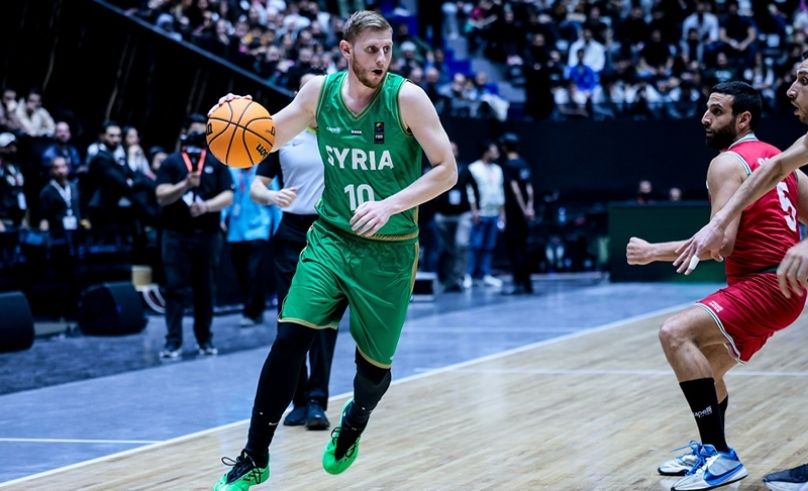
On April 20th, the bounce of a basketball and the sweet sound of a swoosh broke that silence, marking the return of something that had been missing as the Syrian and Lebanese men’s basketball teams took to its court for a friendly basketball game.
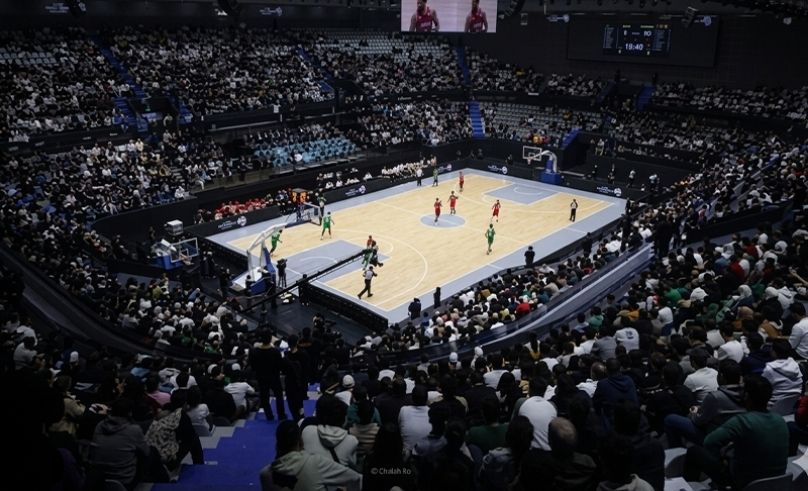
-32c8e2de-754d-424b-97f2-aec7a79caba8.jpg) In front of stands packed with thousands of fans, basketball was back in the ancient city following a full-scale rehabilitation of the historic Al-Fayhaa arena. First built in 1976 to host the 5th edition of the Pan Arab Games, the hall reopened with a capacity of approximately 7,000 spectators.
It now meets the regulatory and technical standards set by FIBA, positioning it as a viable host for officially sanctioned international basketball competitions. That distinction reopens pathways that had long been closed to tournaments, visibility, and to a level of sporting continuity that had gradually eroded.
In front of stands packed with thousands of fans, basketball was back in the ancient city following a full-scale rehabilitation of the historic Al-Fayhaa arena. First built in 1976 to host the 5th edition of the Pan Arab Games, the hall reopened with a capacity of approximately 7,000 spectators.
It now meets the regulatory and technical standards set by FIBA, positioning it as a viable host for officially sanctioned international basketball competitions. That distinction reopens pathways that had long been closed to tournaments, visibility, and to a level of sporting continuity that had gradually eroded.
 The project, completed at a cost of roughly $3 million from the Ministry of Sports’ 2025–2026 investment budget, has been framed by officials as a long-term play and a structural commitment that signals an intent to stabilize and sustain athletic activity.
For decades, Al-Fayhaa’s significance sprawled across sport in Syria. It served as one of Damascus’ primary indoor arenas, hosting basketball, volleyball and multi-sport events at a time when Syria maintained a more consistent presence on the regional sporting map.
The project, completed at a cost of roughly $3 million from the Ministry of Sports’ 2025–2026 investment budget, has been framed by officials as a long-term play and a structural commitment that signals an intent to stabilize and sustain athletic activity.
For decades, Al-Fayhaa’s significance sprawled across sport in Syria. It served as one of Damascus’ primary indoor arenas, hosting basketball, volleyball and multi-sport events at a time when Syria maintained a more consistent presence on the regional sporting map.
-9620d4a0-f7e1-4f73-ac32-d9824d09b157.jpg) Its return is symbolic and strategic on multiple levels. Structurally, it restores a key piece of sporting infrastructure while repositioning Syria within a regional competitive framework that had, in many ways, moved on without it.
For a venue that had spent years on the margins, its atmosphere on the night was effectively a response for the reintroduction of infrastructure, sport, and a return to normalcy.
Its return is symbolic and strategic on multiple levels. Structurally, it restores a key piece of sporting infrastructure while repositioning Syria within a regional competitive framework that had, in many ways, moved on without it.
For a venue that had spent years on the margins, its atmosphere on the night was effectively a response for the reintroduction of infrastructure, sport, and a return to normalcy.