

GRID Wants To Turn Egypt’s World-Class Athletes Into Global Brands
Egypt produces squash champions, handball heroes and Olympic contenders that almost nobody outside their sport knows. GRID wants to change that.


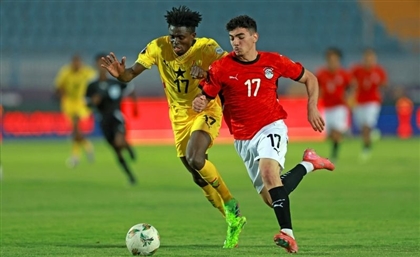
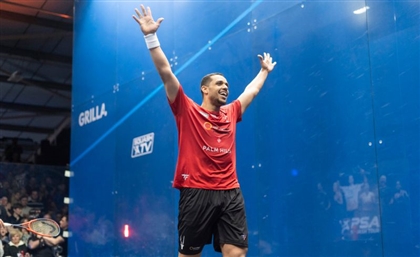
Egypt’s sporting record is formidable. Seven African Cup of Nations titles, a near-monopoly on the global squash rankings and a handball programme that has twice finished in the top 10 at the World Championship. By any measure of sporting achievement, this is a country that competes, and competes seriously.
What it has never managed, outside of football, is to make anyone outside the stadium care about the athletes doing the competing.
Founder and CEO Nada Zaher understands the problem from the inside. A former Egyptian national team tennis player and Columbia University collegiate athlete, she has spent more than six years working in Egypt’s sports industry.-f9784046-221d-47be-838c-8f1af59f26f8.jpg) GRID CEO and Founder Nada Zaher has a name for this problem. “Egyptian athletes,” she says, “are very much stuck in their sport. Their fans are only the people who watch their very specific sport, but they are not public figures seen in other lights.”
GRID CEO and Founder Nada Zaher has a name for this problem. “Egyptian athletes,” she says, “are very much stuck in their sport. Their fans are only the people who watch their very specific sport, but they are not public figures seen in other lights.”
Globally, the relationship between sport and culture has been transformed when luxury houses collaborate with footballers, NBA players sit front row at fashion weeks, and tennis players front campaigns that have nothing to do with tennis. In Egypt, she says, “these collaborations haven’t happened yet. We haven’t been able to get the athletes outside of their sports space.”
GRID is a new Cairo-based athlete management agency by Nada Zaher and Amr Mansi that wants to do for Egyptian sports talent what IMG and Octagon have done in the west, build athletes into public figures, broker deals that go beyond the logo-and-billboard transaction, and create a long-term brand equity that survives, even outlasts, a sporting career. It is an ambitious project, launched into a market that has never worked this way before. But as Egypt prepares for the 2026 FIFA World Cup and the 2028 Olympics - the first Games at which squash will compete, the timing feels right.-31b29544-5f82-4d44-8bd8-42db2eb7be64.jpg) Partner Amr Mansi, whose work spans international squash events, the El Gouna Film Festival and Egypt’s Entrepreneur Awards (developed in collaboration with Zaher), sees GRID as a natural evolution of that work.
Partner Amr Mansi, whose work spans international squash events, the El Gouna Film Festival and Egypt’s Entrepreneur Awards (developed in collaboration with Zaher), sees GRID as a natural evolution of that work.
“Having worked with Nada on Egypt’s Entrepreneur Awards, we’ve already seen what can happen when you bring structure, storytelling and the right ecosystem around talent. Egypt doesn’t lack world-class athletes, it lacks the platforms that elevate them into culture. With GRID, we believe we can apply that same model to sport and genuinely disrupt how athletes are positioned and commercialised in this market.”
The problem GRID is trying to solve is not unique to Egypt, but it is acutely felt with Egyptian corporate sponsorship of sport historically following transactional logic where a bank or a real-estate developer identifies a prominent athlete, pays a fee, and gets the athlete to wear their branding in competition. The athlete’s image appears on a billboard on the Ring Road. Twelve social media posts are agreed for the year. And that, in most cases, is that. Deal done.
“There’s no activation, there’s no campaigning, there’s no storytelling beyond the campaign. So the ROI that’s actually gained out of this collaboration is not as much as the client would have expected," Zaher argues. "The brand invests in a name, but nobody has been hired to make that name mean anything, to make it a brand.”
GRID’s proposition is to sit inside that transactional ecosystem and transform it into something more durable and meaningful. On the athlete’s side, the agency works on brand-building in its fullest sense with social media strategy, PR, public appearances, post-career planning, and access to the support infrastructure — physiotherapists, nutritionists, sports psychologists — that elite athletes in Europe take for granted, but that most Egyptian athletes have had to navigate alone.
“A lot of athletes can do well technically, they win, and all of this goes unseen,” she says, “because it remains in a very specific audience.”
On the commercial side, GRID approaches brands as a strategic partner, prioritising approaches that design the activation around the athlete’s specific value rather than simply invoking their name.
“The goal is visibility in registers Egyptian athletes have never occupied: fashion, entertainment, luxury, lifestyle. We seek to turn a sporting champion into a cultural figure,” Zaher explains.
Calling GRID a talent agency is accurate in some respects, but the term carries connotations she wants to avoid, such as the implication of a roster of clients available for hire, or a transactional relationship that ends at the contract. Zaher prefers the term 'athlete management agency'.-1735d950-506f-4b25-974e-7bbd5180d2e0.jpg) “We represent them, yes , but we do much more,” she says.
“We represent them, yes , but we do much more,” she says.
The model is commission-based depending on the seniority of the athlete, with the higher rate applying to newer or smaller names, and retainers for ongoing social media and content strategy. But the true standout from a conventional representation deal is the end-to-end involvement.
The metrics GRID uses are a mix of the quantitative and the contextual bearing in mind follower growth, engagement rates, direct sales attributed to an athlete’s promotion. But Zaher is equally interested in the softer returns, whether an athlete is now appearing in spaces that would previously have been closed to them, or whether the story being told about them has expanded beyond match results and tournament brackets.
GRID is launching with a handpicked top roster, established athletes who are both technically excellent and ready to invest time in the slower, less glamorous work of brand-building. For Zaher, an athlete who does not understand the value of a commercial profile who sees appearances and content as a distraction from training is not an athlete GRID can help, regardless of their ranking.
“We need someone who is invested,” she says. “A very focused athlete, professional in the sense that they have a structure in their life. Someone who can carry themselves well off the field as well as on it and if not, we invest in helping with that too.”
GRID takes the selection process seriously with performance being the first filter, but Zaher also speaks to federations and coaches and reads the athlete’s reputation within their circuit.
“I am looking for something beyond technical excellence, a self-discipline that extends off the court,” she says. “Athletes with controversial public images, or whose conduct has complicated their standing in their sport, are not candidates for GRID’s roster, regardless of their commercial appeal.”
When pushed on names, Zaher is careful but concedes to allow a little peek, revealing Nour El Sherbini is among the first on the roster.-e8307b08-4dd2-4fab-82af-42b4ba13e3ce.jpg) “She is the kind of athlete GRID was built for. The eight-time world squash champion, the most decorated player the sport has ever produced and needs a cultural moment beyond courts.”
“She is the kind of athlete GRID was built for. The eight-time world squash champion, the most decorated player the sport has ever produced and needs a cultural moment beyond courts.”
It is also, she explains, a strategic starting point. “I believe squash is the first and most obvious opportunity,” Zaher says. “With it being in the Olympics in 2028, this almost guarantees it for maybe two or three more cycles.”
“Padel is another, it’s growing fast and picking up the social energy tennis once had and carrying it somewhere younger and more accessible. And then there is handball, where Egypt is genuinely excellent, with real World Championship finishes, but still plenty of room to grow on the commercial side.”
Beyond the current roster, the athlete management company has already begun conversations with the next generation, athletes as young as 13.
“We believe we need to invest in brand-building at a much earlier age,” she says. “Because then, when they’re at their peak performance, they become much more valuable.”
- Previous Article 9 Iconic Marathon Destinations in the Middle East
- Next Article WATCH: Saudi’s First Pro Boxer Knows How to Take a Jab